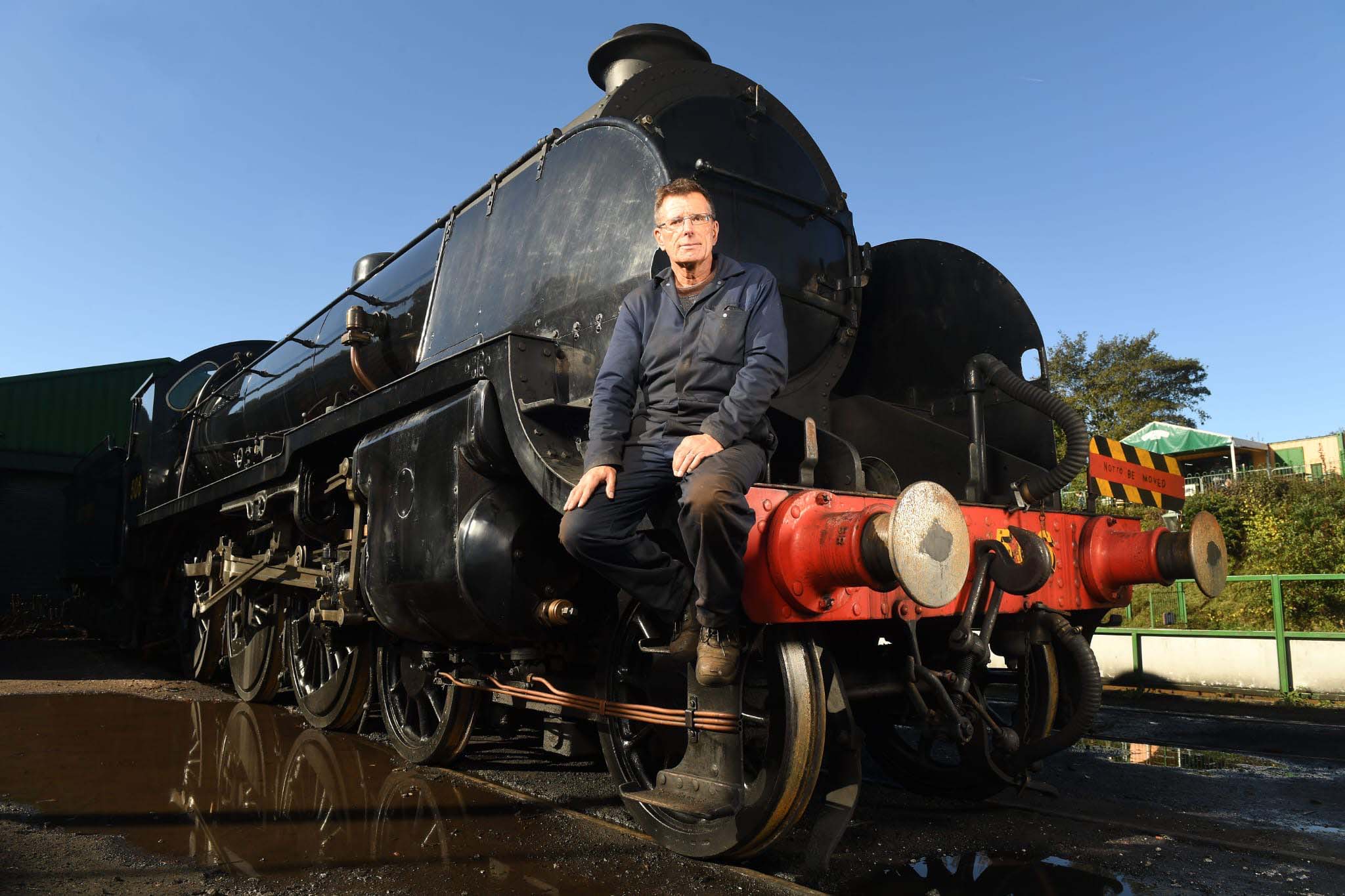
It is with the deepest sadness that I have to let you know, that our beloved chairman, Mark Pedley, passed away on the morning of the 12th April following a brave fight against cancer.
I am sure that you will all join me in offering Marks`s wife, Lyn, and the rest of his family our heart felt sympathies.
As you can imagine the team at Ropley are absolutely devastated by the loss of Mark. He was a dear friend to us all and we all held him the highest regard. We will certainly miss his dogged determination, wicked sense of humour and his ability to extract money for 499 out of anyone who passed by.
Mark`s passing obviously leaves a huge hole, and as Mark Collins commented in his piece in Stovepipe it is difficult for us imagine anyone replacing him. But, we must move on, it is what Mark would have wanted us to do. Please be reassured that the team at Ropley are committed to doubling their efforts to get 499 running again, and we respectfully ask you, our members, to help us in any way you can. Please spread the word far and wide so that we can all enjoy the sight and sound of two Urie S15`s working together over The Alps on The Watercress Line.
With kindest regards to you all
Neil Marshall Vice Chairman, Urie Locomotive Society
Join or Login as a Urie Society Member supporting us in restoring and running our two Urie S15s 506 and 499 whilst enjoying our regular newsletter “Stovepipe”. Register and manage your subscription online
The aim of the society is to preserve an example of Robert Urie’s class S15 4-6-0 locomotives for operation. In fact, the society owns the only two surviving Urie S15’s, numbers 30499 and 30506, built for the London & South Western Railway in 1920 at Eastleigh Works to haul heavy goods trains. To compliment our engines, the society also owns a range of ten typical goods vans and wagons to form a short goods train.
30499 is a long-term restoration project to bring her from Barry scrapyard condition to full working order. Much work has been done, on wheels and frames and a new appeal was launched in 2012 to raise the final funds to complete its restoration to run alongside 506.
30506 was restored from Barry scrapyard condition at Ropley between 1976 and 1987 and was launched into traffic in Southern green as 506 in October. 506 operated on the Mid-Hants Railway for fourteen years before being withdrawn in 2001 for another major overhaul. This Urie S15 steam locomotive returns to service on June 2nd 2019 after an 18–year absence.
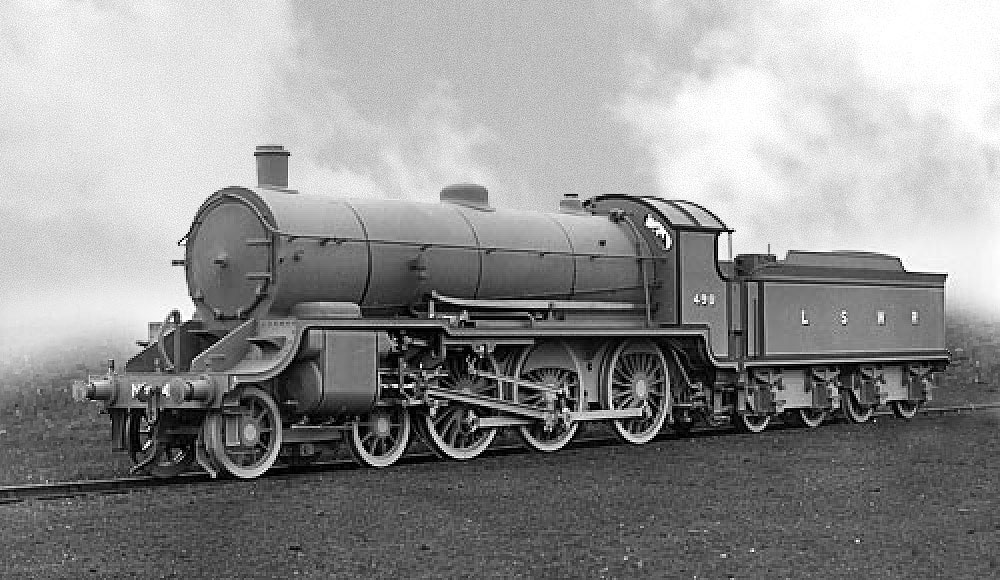
Urie S15 No. 498 at Eastleigh in official photographic grey livery in 1920. (Mr A Major)
If you would like to contribute to our S15 restoration and running costs please use the following Paypal donation button. Each penny brings us closer to having these last surviving Urie designed S15s back in service together.
#ThankYou
Latest
The memories of those who maintained, fired and drove the engines which we strive to restore are as valuable as any engine we restore at The Watercress Line. Though we may repair and replace parts of our engines, returning them to their running glory days, those personal memories are irreplaceable.
Join us as we speak to Mick Chandler who whilst based at Feltham Shed from the 1950’s progressed from cleaner to fireman and driver, with experiences on our very on Urie S15 499.
The LSWR S15 class was a British 2-cylinder 4-6-0 freight steam locomotive designed by Robert W. Urie, based on his H15 class and N15 class locomotives.
Learn about 30506 and 30499, two locomotives designed by Robert Urie in 1920 with this video by the Watercress Line where our engines are held…